What Is That Thing on Your Wall?
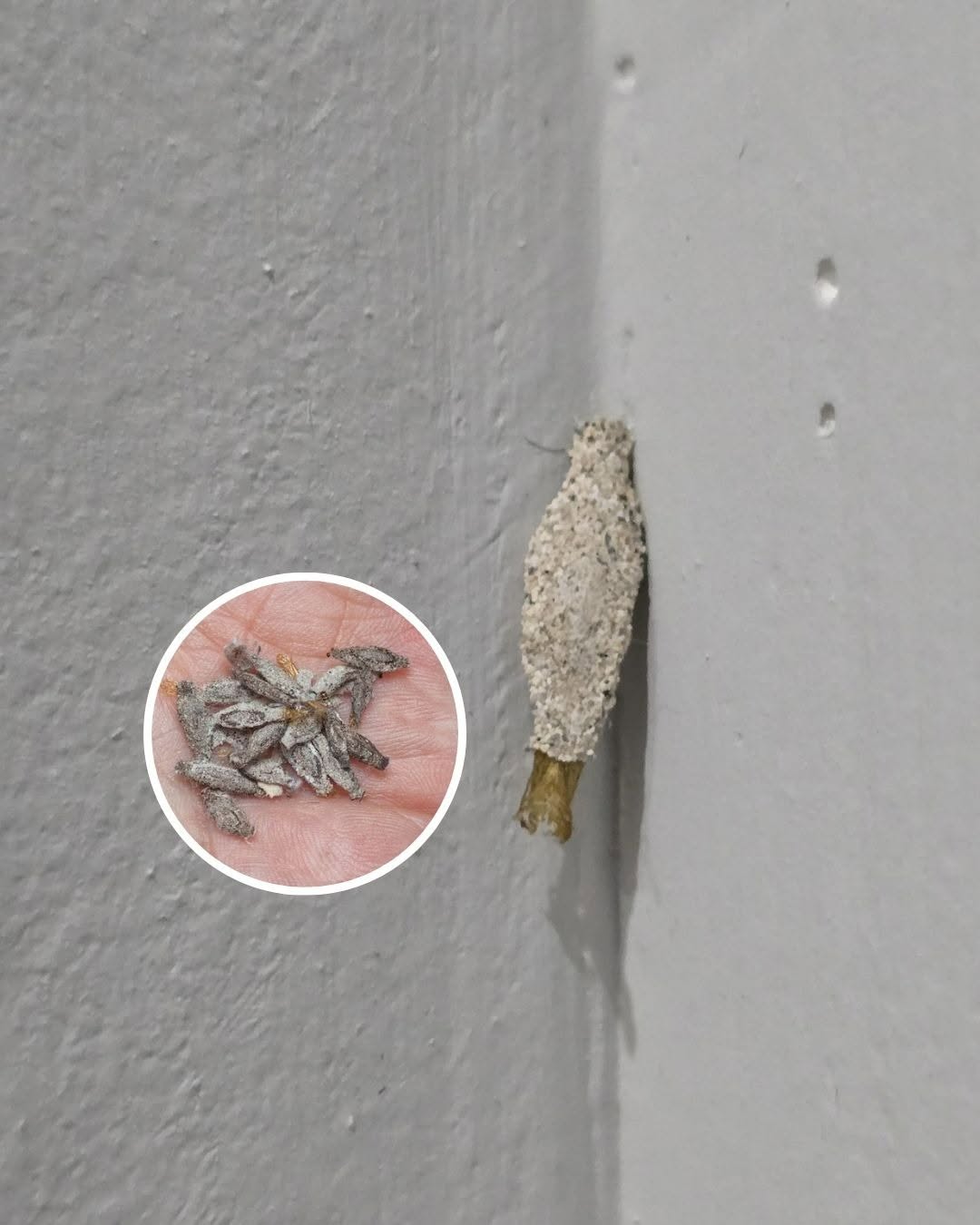
You’ve probably seen it before. You’re going about your day, and suddenly you notice a small, gray, seed-like lump clinging to your wall or ceiling. It doesn’t move. It doesn’t make a sound. It just… hangs there, looking vaguely like a piece of dried dirt or a strangely textured grain of rice .
If you’ve ever poked one and watched it twitch, you know the unsettling feeling. What is that thing?
Meet the Kamitetep—also known as the household casebearer or plaster bagworm. Despite its creepy appearance and unsettling nickname (it literally translates to “wall caterpillar”), this little creature is more of a nuisance than a nightmare .
But let’s dive into what it actually is, why it’s hanging out in your house, and whether you should be worried.
Kamitetep: The Moth That Carries Its House
Ironically, the “bug” you’re staring at on your wall isn’t technically a bug yet. It’s the larval stage of a small, grayish-brown moth . The scientific name is Phereoeca uterella, and it belongs to the family Tineidae, which includes clothes moths .
What you’re seeing is the larva’s portable protective case. The larva spins this case out of silk and then camouflages it with whatever debris is nearby—dust, sand, soil, dead insects, spiderwebs, and even human hair .
-
Shape: Flattened, oval, and slightly curved, about 8–14 mm long .
-
Color: Grayish-brown, often matching the wall it’s attached to.
-
Movement: The larva sticks its head and legs out of one end to crawl, dragging the case along like a snail shell. When disturbed, it retreats back inside .
Eventually, this larva will pupate inside the case and emerge as a small, unremarkable moth . But it’s the larval stage that gets all the attention—and all the side-eye.
Why Are They in My House?
Kamitetep are opportunistic little creatures. They don’t build webs or hunt prey. Instead, they feed on a surprising variety of organic matter found in homes .
-
Diet: Spider webs, dead insects, wool, silk, feathers, hair, lint, and even old book bindings .
-
Habitat: They love warm, humid, still environments. You’ll typically find them in bathrooms, basements, closets, garages, and attics .
If you have a lot of spiderwebs or dust in hard-to-reach corners, you’re essentially running a bed-and-breakfast for Kamitetep.
Are They Dangerous? (Spoiler: No)
Here’s the good news: Kamitetep are not dangerous. They don’t bite. They don’t sting. And they won’t infest your food .
However, they do have one annoying trait: they can cause skin irritation. The larvae have fine hairs that can cause itching, redness, or small bumps, especially for people with sensitive skin or allergies . Inhaling dust from their cases can also irritate the respiratory tract for those with asthma or allergies.
On the “threat scale,” they’re more of a creepy nuisance than a health hazard.